Mapping the Cloud - A Look at Major Cloud Providers, 2006 to Now
From an understated launch by AWS in 2006 to the massive capex investments we see in 2026, cloud computing has utterly revolutionized how we think about acquiring and using compute capacity.
I have found this entire space fascinating since 2008, and I wanted a simple way to plot and compare the overall growth over time. So I created a Cloud Region Launch History tool. You can filter to specific times, across providers, sovereign regions, government clouds and industry specific offerings.
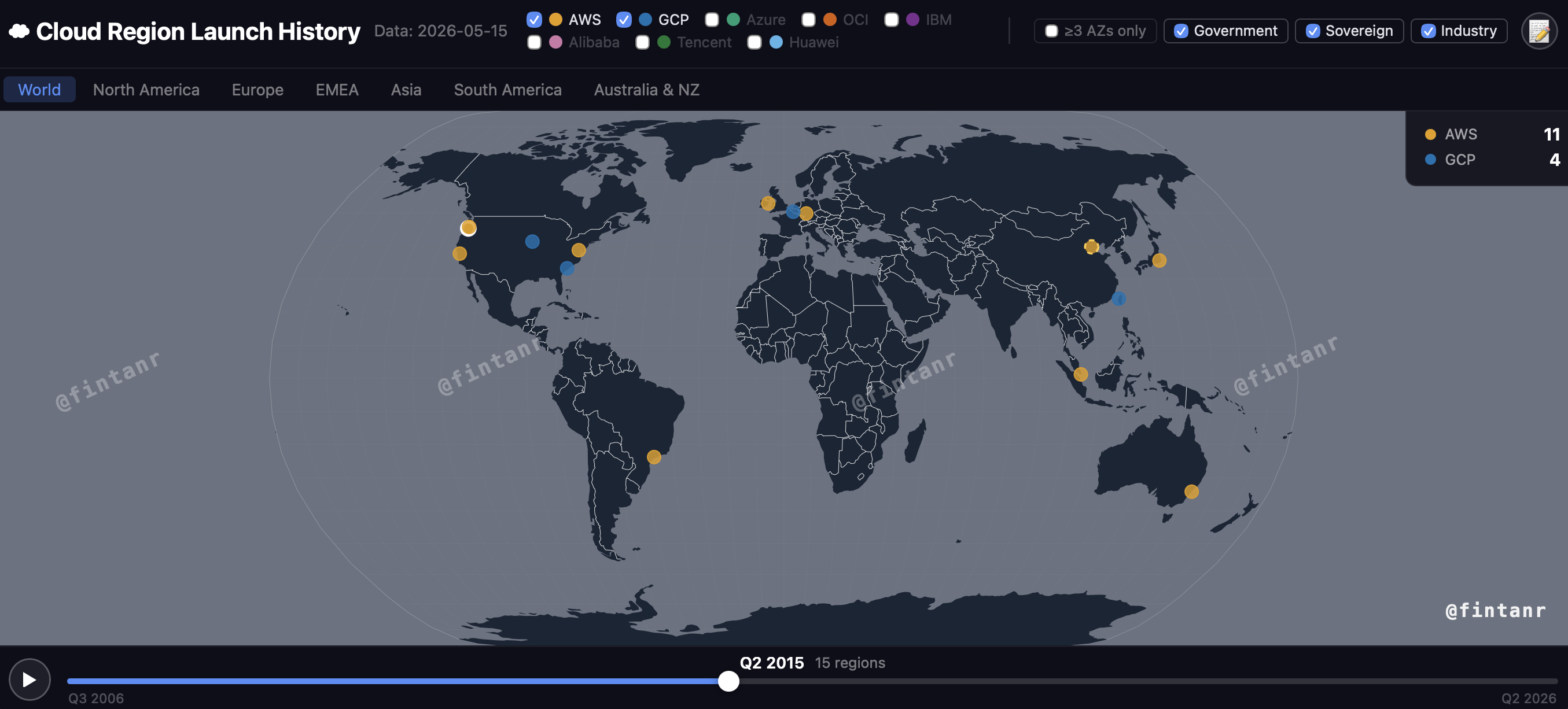
For example my analyst career started in 2015 at RedMonk, the map for AWS and GCP looked a bit like this:
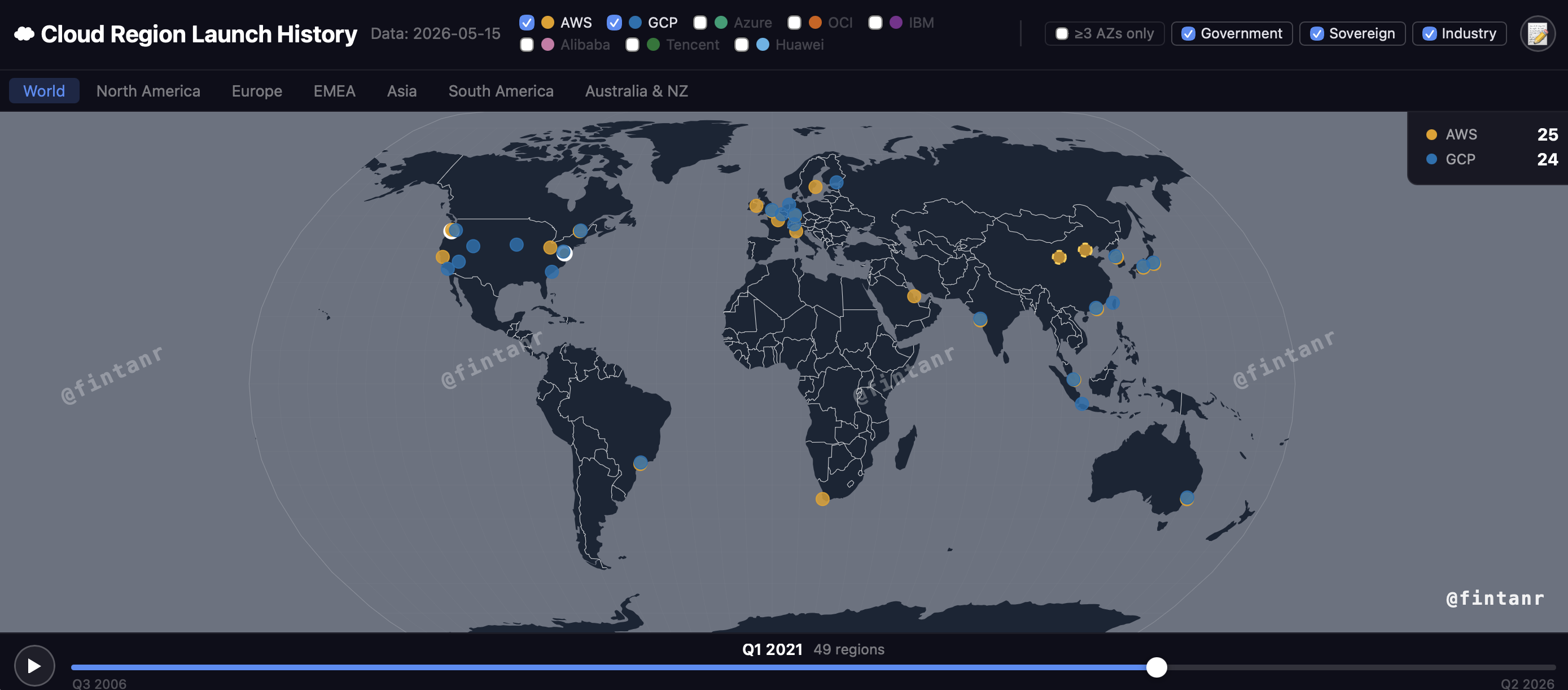
And by the time I led the Cloud Application Platforms research at Gartner in early 2021 the map was:
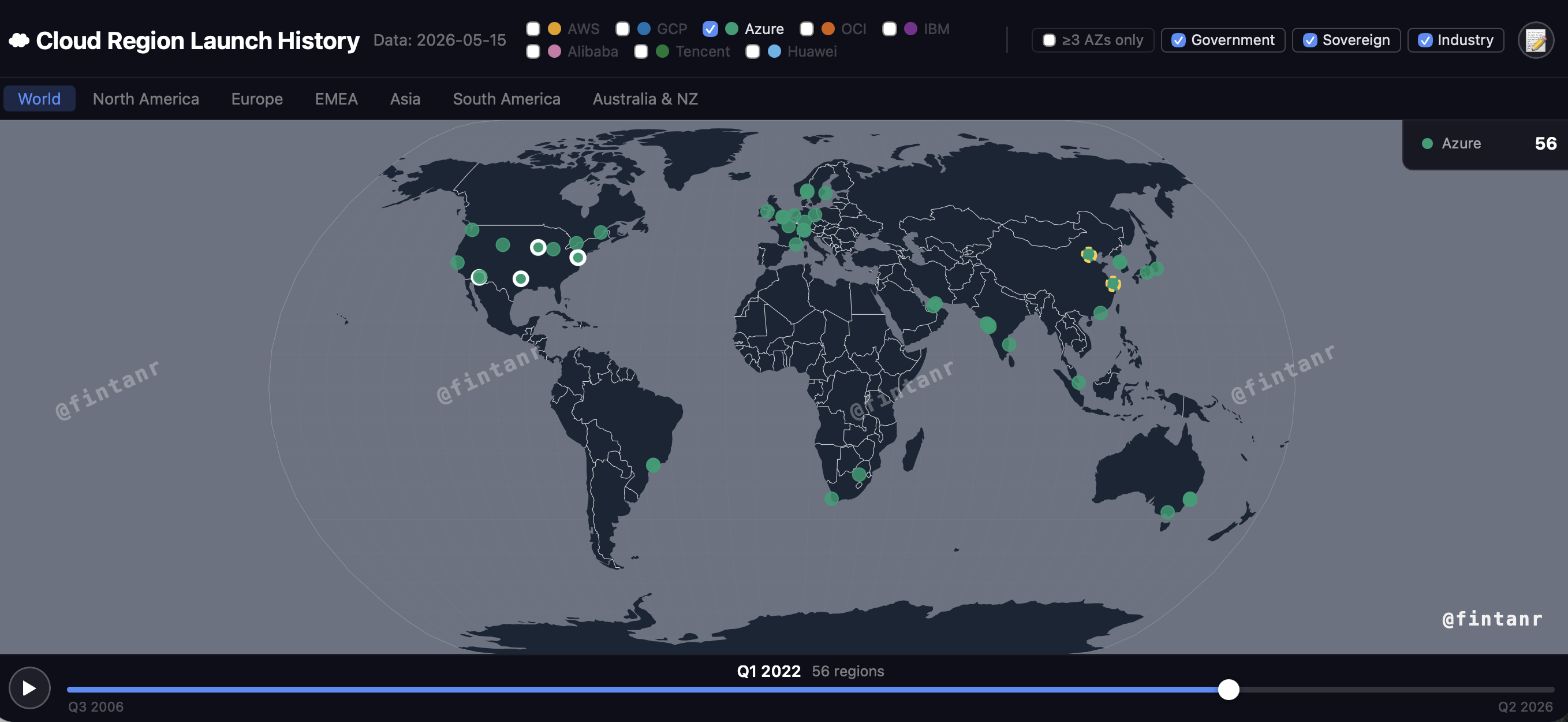
When I left the analyst game and joined GitHub later in 2022, Azure’s footprint was:
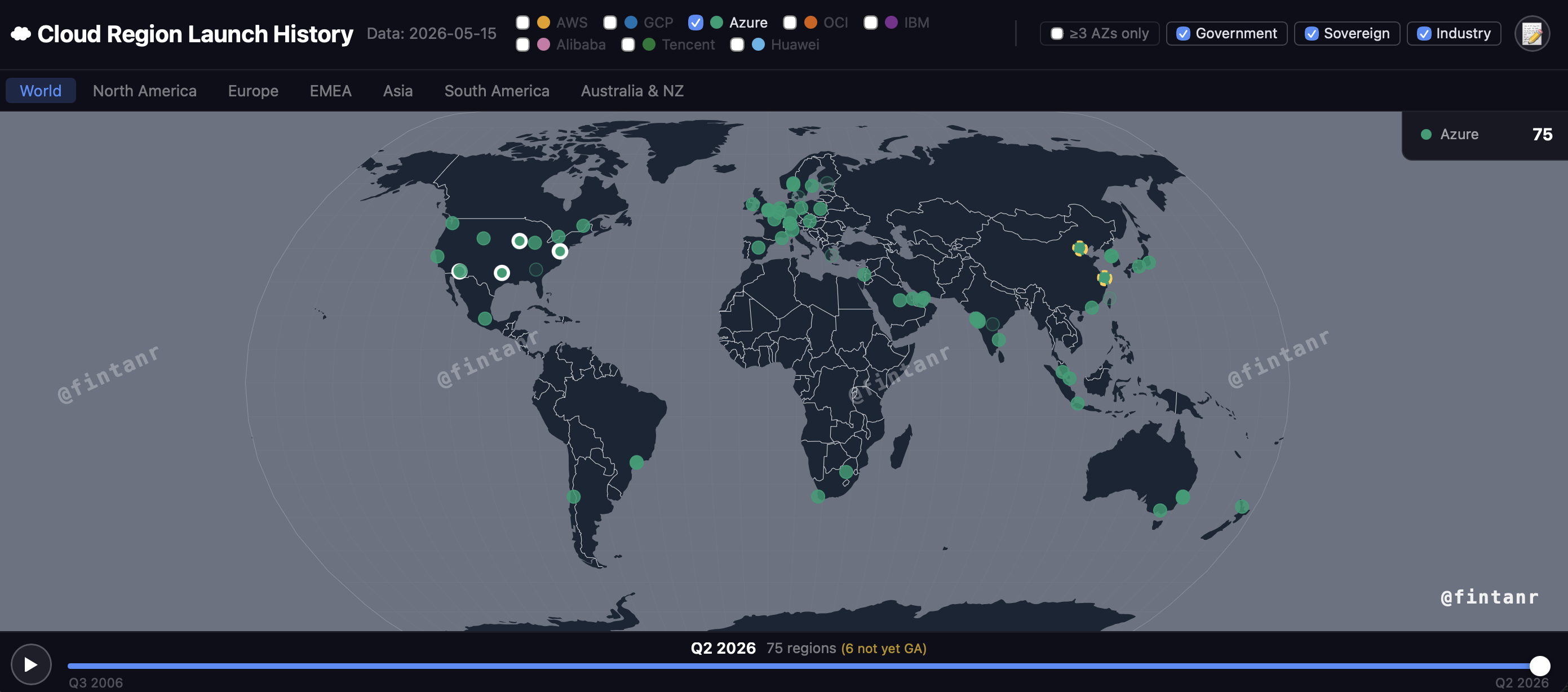
And these days it looks like:
The tool is available to anyone to use. Constructive comments and feedback on any obvious glaring data gaps (there are a few where the number of AZs needs to be further verified) appreciated.
Notes on the Data
Data is sourced from public announcements and documentation. We will have gaps where vendor specific details are behind a login or paywall. We include a filter to eliminate regions with less than 3 AZs. That said, the definition of an AZ, and in particular the geographic distances between each AZ, varies between providers - so do check this data yourself.
Providers covered:
We included the three hyperscalers:
And a set of smaller or regional providers:
The providers I included for this iteration are the same as those Gartner included in the (catchily titled) Magic Quadrant for Strategic Cloud Platform Services, published in August 2025. Gartner have a minimum revenue requirement of at $1Bn for vendors with more than three years GA, or $500M with 40% CAGR for those who have been GA for less than three years. There are a bunch of other criteria, but I find this useful as a guideline.
Disclosures: I covered cloud, and specifically application development in cloud environments extensively at Gartner and RedMonk. During that time I attended numerous analyst events related to each of the hyperscalers. I currently work at GitHub.